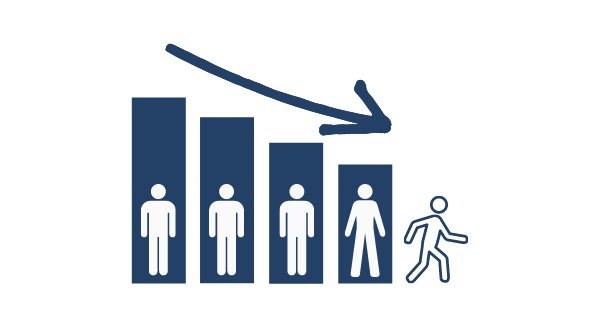
Your New AI Bot Is Not the Answer to Achieving Low Churn With Your Physical AI Products
A bot handles volume, never calls in sick, and looks great in a budget meeting. What the deflection rate slide does not show you is what happens when the bot hits the edge of what it knows and a customer is holding a physical device that has stopped working. Software fails quietly. Physical AI fails in front of people. The companies that treat human support as a backup to automation are the ones writing off customers they never had to lose.
The bot looks great in the budget meeting. It handles volume, it never calls in sick, and whoever sold it to you had a compelling slide about deflection rates. Here is what that slide did not show you: what happens at the edge of what the bot knows, and what that moment costs you on a physical AI product.
Bots are useful until they are not, and the drop-off is expensive. Routing a customer to the right place, handling a common question, managing volume at scale, these are real efficiencies and they belong in your stack. But a bot does not fail gracefully. When it hits the boundary of what it knows, it stalls. It loops. It gives a non-answer to a customer who is already frustrated. For a CFO, that moment has a number attached to it. It is not a service hiccup. It is the beginning of a churn event, and on a physical AI product, those events are far more expensive to recover from than they are to prevent.
A device in someone's hands requires a layer of support no bot can provide. Software fails quietly. Physical AI products fail in front of people. There is a device with a lifecycle, with diagnostic data, with failure modes that are specific and addressable, and there is a human being on the other end who is holding it and losing confidence in you. Closing that loop requires direct human interface capability and access to device-level diagnostics. Not as a backup to the bot. As a non-negotiable part of the experience. The companies that treat this as optional are the ones writing off customers they did not have to lose.
The customer has to feel surrounded. This is the part that almost never makes it into a customer success playbook, and it is the part that actually moves the retention number. The goal is not response time. The goal is presence. Your customer should feel that wherever they are using your product, however they are using it, you already know what is happening before they have to tell you. You know the device. You know the usage pattern. You are already there. That sense of being surrounded by support is what converts a product user into someone who never considers leaving. We ran 20,000 devices on this philosophy and finished with less than one percent churn when we sold our business. That is not a theory.
Don't fall in love with your bot. The real number to protect is lifetime value. Right now, protecting that number requires a human layer working alongside your automation. Bots have their place. The CFO who mistakes efficiency for strategy will find out what the difference costs them. Just don't fall in love with a bot.